
Taoist Resilience:
Turing Crisis into Quiet Strength
BY SPRING FOREST QIGONG
The project deadline shifts unexpectedly. A difficult conversation with a partner leaves you feeling drained. A sudden health concern appears, seemingly out of nowhere. These moments of disruption are an unavoidable part of life. Our modern response is often to “push through,” to grit our teeth and exert more force against the problem. We treat resilience as a form of armor we must wear, bracing for the next impact.
But what if true resilience wasn’t about being harder, but about being softer? What if it was less like a dam holding back a flood and more like a river that flows around obstacles? Taoist wisdom offers a different perspective—one that teaches us to find quiet strength not by fighting against life’s currents, but by learning to move with them. It’s a resilience born from inner alignment, not external force.
The Foundations of Taoist Strength
To understand Taoist resilience, we need to touch on a few core principles that guide this ancient philosophy. These ideas aren’t rigid rules but gentle observations about the nature of life itself.
The Tao: The Natural Way
The Tao is often translated as “the Way” or “the Path.” It is the natural, underlying flow of the universe. It’s the force that makes rivers flow to the sea, trees grow toward the sun, and seasons change without command. When we are in alignment with the Tao, life feels less like a struggle. Resilience, from this viewpoint, is the ability to return to this natural flow when we are knocked off course.
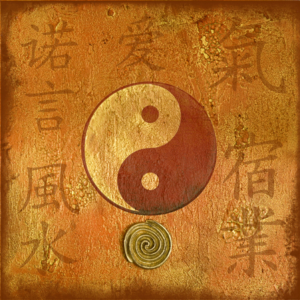
Yin and Yang: The Dance of Balance
You’ve likely seen the symbol: a circle divided into a black swirl and a white swirl, each with a dot of the opposite color. This represents the concept of yin and yang—the interconnectedness of opposing forces. Light and dark, rest and action, crisis and opportunity. Taoist thought recognizes that these are not separate but are two sides of the same coin. A crisis (yin) always contains the seed of an opportunity (yang). Understanding this helps us stop seeing challenges as purely negative events.
Wu Wei: Effortless Action
This is perhaps one of the most misunderstood but powerful Taoist concepts. Wu wei is often translated as “non-action” or “effortless action.” It doesn’t mean being lazy or passive. Instead, it means acting in a way that is so aligned with the natural flow of a situation that your actions feel spontaneous and effective, without struggle or internal resistance. It’s like a skilled sailor using the wind to guide the boat, rather than trying to row against it. Resilient action, through the lens of wu wei, is timely, intuitive, and surprisingly powerful.
Returning to Center: The Dantian
In many Eastern practices, the dantian refers to key energy centers in the body. The lower dantian, located a few inches below the navel, is considered our center of gravity and energetic stability. When we feel scattered, anxious, or overwhelmed, consciously bringing our awareness back to this center can have an immediate grounding effect. It’s like finding the calm eye of a storm.
Reframing Crisis: The Opportunity Within
From a Taoist perspective, a crisis is never just a problem; it is a message. It is a powerful signal that something is out of alignment. Whether in our business, our relationships, or our health, a challenge provides a profound opportunity to pause and look inward.
Instead of immediately blaming external circumstances or other people, the first step is to examine ourselves. This is not about self-criticism. It is about gentle, honest inquiry. You can ask:
- What was my mindset leading up to this?
- Was I acting from a place of fear or from a place of purpose?
- Have my actions been aligned with my deeper values?
This inner pivot allows us to find a purpose that is “bigger than the pain.” When your reason for acting is rooted in something meaningful—like genuinely helping others, creating with integrity, or leading with love—the personal suffering of a setback becomes smaller. You find the strength to stand up taller because you are connected to something beyond your immediate discomfort. The crisis becomes a catalyst for growth, helping you to correct your course and realign with your true path.
Simple Practices for Quiet Strength
Taoist resilience is not an abstract theory; it is a lived practice. You don’t need to retreat to a monastery to cultivate it. The following are simple, safe, and practical ways to integrate this quiet strength into your daily life.
1. The Pause & Pivot
When you feel triggered or overwhelmed, resist the urge to react immediately. Instead, pause. Take three slow, gentle breaths. On the third exhale, ask yourself one simple question: “What is this situation here to teach me?” This small gap between stimulus and response is where your power lies. It shifts you from a reactive state to a reflective one.
2. The Middle Breath
Your chest, or middle dantian, is considered the center of love and connection. Several times a day, especially when feeling stressed, simply bring your awareness to the center of your chest. Imagine a warm, soft light there. Breathe gently into this space, without forcing anything. This practice can soothe the nervous system and reconnect you to a sense of compassion for yourself and others.
3. Evening Simplification
Quality sleep is fundamental to resilience. In Taoism, this means creating the right conditions for the body’s energy to settle. One of the most effective ways to do this is to stop eating two to three hours before bed. This allows your digestive system to rest, so your body and mind can fully relax into sleep instead of working through the night.
4. Gentle Collarbone Tapping
The area just under the collarbones is connected to the lungs in many traditional systems. When you feel anxious or your breath is shallow, you can use your fingertips to gently tap this area. This simple act of self-soothing can help release physical tension, open the breath, and ground your energy when you feel scattered.
5. The Relationship Reframe
In a disagreement, our ego often wants to win. Taoist wisdom reminds us that in arguments, there are no real winners. Instead of pushing your point, try a simple reframe: “That’s interesting—I’ll reflect on it.” This doesn’t mean you agree, but it honors the other person’s perspective and gives both of you space to think. It replaces conflict with connection.
6. The Beauty Scan
We are surrounded by beauty, but we often lack the attention to notice it. A lack of discovery, not a lack of beauty, is the problem. A few times a day, pause and intentionally name three beautiful things you can perceive. It could be the way light falls on the floor, the intricate pattern of a leaf, or the sound of birdsong. This practice pulls you into the present moment and cultivates a deep sense of gratitude.
Bringing Taoist Resilience into Your Life
These principles and practices can be applied to every area of your life.
- At Work: When a project fails, instead of just assigning blame, use it as an opportunity to review the team’s mindset and purpose. Were you focused on quarterly numbers or on providing real value? Use the Pause & Pivot before responding to a stressful email.
- In Relationships: When conflict arises with a loved one, practice the Relationship Reframe. Look inward first and ask how you contributed to the situation. Focus on being genuine rather than being right.
- With Your Health: View a health challenge as your body’s call for attention. Use Evening Simplification to improve your sleep. Practice the Middle Breath to reduce stress, a major factor in many health issues.
True resilience is a quiet, flexible strength that comes from within. It is the wisdom to know when to act and when to allow, when to hold on and when to let go. By embracing these simple Taoist principles, you can learn to navigate life’s inevitable challenges with more grace, less struggle, and a deeper sense of inner peace.
Start tonight. Before you sleep, try one practice. Perhaps it’s the Beauty Scan or simply stopping your late-night snack. Notice how this one small shift feels. That is the beginning of the Way.
But what if true resilience wasn’t about being harder, but about being softer? What if it was less like a dam holding back a flood and more like a river that flows around obstacles? Taoist wisdom offers a different perspective—one that teaches us to find quiet strength not by fighting against life’s currents, but by learning to move with them. It’s a resilience born from inner alignment, not external force.